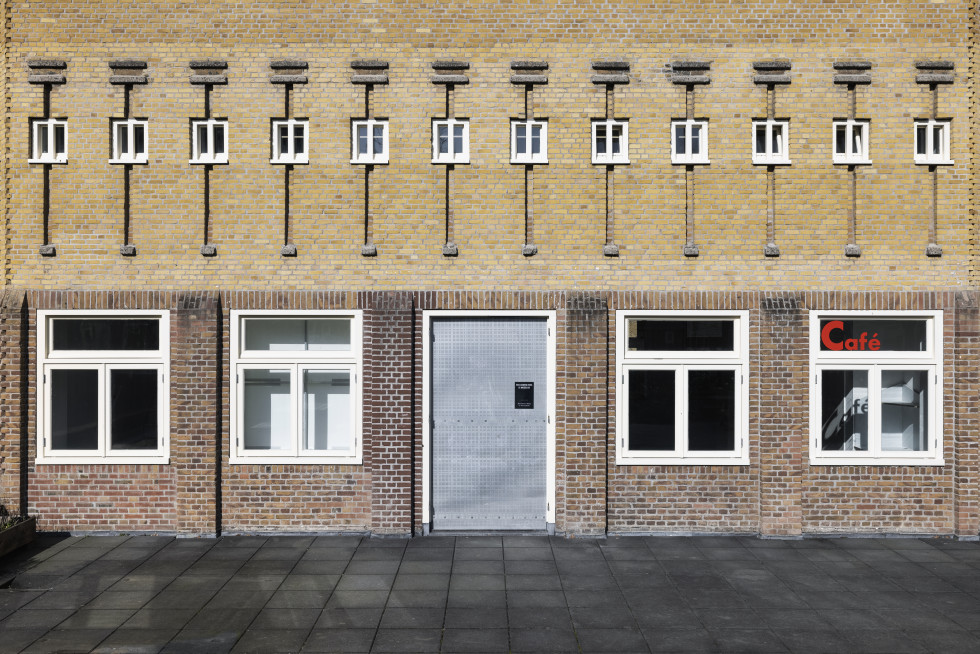
Image: Katrina Palmer, Another Way is Possible, 2026, exterior metal door screen and poster, 138 x 234cm.
Four-story, Flat-roofed Complex in a Somewhat Expressionist Style
KATRINA PALMER
February 21 – May 24, 2026
Guest writer: CÉDRIC FAUQ
My exhibition, Four-Story, Flat-Roofed Complex in a Somewhat Expressionist Style, is at A Tale of A Tub, Rotterdam, from February 21 to May 24, 2026. I want to spend the duration of the show removing their front wall. There are complications. The proposed demolition is prohibitively expensive and self-defeating. The institution occupies the centre of a housing estate, the Justus van Effencomplex. Good community relations and the programming of contemporary artwork are central to the institution’s work. The wall between A Tale of A Tub and the residential homes is porous, but the suggestion of removing it altogether draws attention to its existence which evokes division as much as it highlights the institution’s value. Also, the estate is a superb example of Modernist architecture, listed as having heritage status, notable for its innovative elevated streets and attention to detail, including its Expressionist brickwork and the former bathhouse and washhouse, now home to the art institution. The architect, Michiel Brinkman (1873–1925), ascribed to a doctrine of Theosophy and (although more dubious Theosophic principles promote spiritual abstraction from the everyday) he created well-designed housing to support social cohesion. Although an art institution was not part of Brinkman’s original vision, it does contribute positively to the environment. Without the wall, there would be no institution, no exhibitions and a culturally significant building would no longer exist. But the work is already underway. A consultation process is set in motion, incorporating the curator and interested parties. Through all of this I’m conscious of the contradictions of attempting to produce space, of wanting to see what isn’t there, of being critical of aggressive territorial claims in the global context, while temporarily occupying a site and suggesting an act of forceful abstraction. The demolition, however, is a proposal, a what if that is mobilised through discussion, material displacement or decentering and specially constructed notices. Expanding from my writing practice, I’ve made digital drawings and added to them manually to augment the space between lines of text. And underneath my desk, I recorded a video. The exhibition situation extends through the institution’s basement, across the ground floor and into a reading area on the mezzanine where a short story incorporates the protagonist’s Notes Towards a Paranoid Construction.
Events
Saturday, February 21, 2026, 5:00 – 8:00 PM
Exhibition Opening: KATRINA PALMER: Four-story, Flat-roofed Complex in a Somewhat Expressionist Style
Wednesday, April 15, 2026, 7:00 – 8:00 PM
Dark Reading of ‘Notes Towards a Paranoid Construction’ with Katrina Palmer
Publications
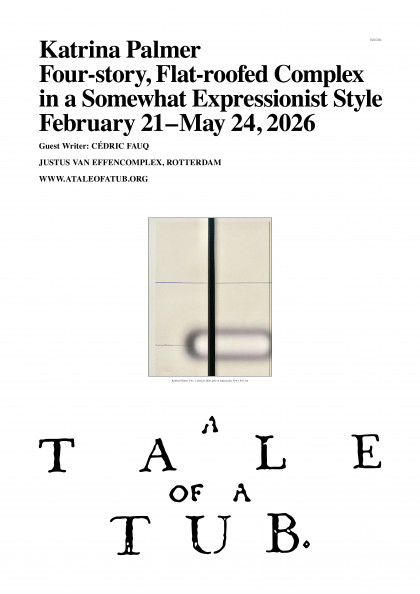
Katrina Palmer: Four-story, Flat-roofed Complex in a Somewhat Expressionist Style
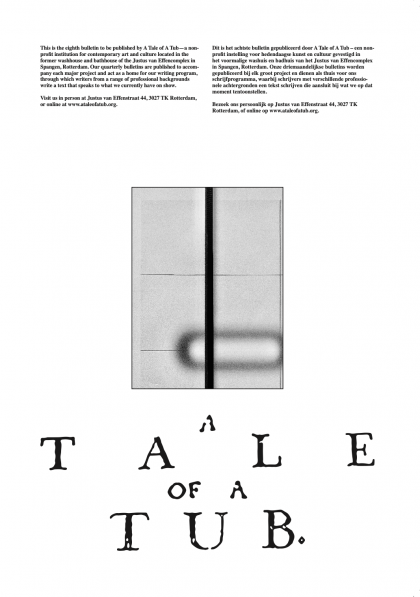
Bulletin 1/2026
By Cédric Fauq
Biographies
KATRINA PALMER’s publications and exhibitions use storytelling and covert physical presences, resulting in works that are discursive and unsettled across writing, drawing, moving image, objects, sites and events. She was the 2024 Artist in Residence at the National Gallery, London, culminating in her exhibition and book The Touch Report. Among her other solo shows are What’s Already Going On at the Mead Gallery, Coventry, in 2023; Hello for England’s Creative Coast in 2021; The Necropolitan Line at Henry Moore Institute, Leeds, in 2015; and End Matter, produced by Artangel and BBC Radio 4 in 2015. Her books include Black Slit, The Fabricator’s Tale, End Matter and The Dark Object, all published by Book Works, London, as well as contributions to other publications such as The Whitechapel MIT Documents of Contemporary Art series. Palmer received the Paul Hamlyn Award for Artists in 2014. A career survey, Want to See Something Real, was published by the National Gallery, London, in 2025.
CÉDRIC FAUQ is chief curator at Capc musée d’art contemporain de Bordeaux since 2021, where his most recent projects include the collective exhibitions Rammellzee Alphabeta Sigma (B Side) [co-curated with Hugo Vitrani], Air de repos (Breathwork), as well as Double Vie with K. Desbouis and Camille Alena [co-curated with Margaux Bonopera]. At Capc, he also launched the performance festival L’Académie des Mutantes [The Mutant Academy] and collaborated with artists Nina Beier, Abbas Zahedi, Olu Ogunnaike, Sung Tieu, Aria Dean and Maxime Bichon. Previously, he worked as curator at Palais de Tokyo and Nottingham Contemporary. He also writes and develops projects independently, the most recent ones being a solo exhibition of Michael E. Smith at Galerie Crèvecoeur (2025) and Matthieu Laurette: une retrospective dérivée (1993–2023) at MAC VAL.
Support
Ligia Cristea has worked as a curatorial assistant and key conversation partner throughout the whole process. Pilar Mata Dupont also co-ran production throughout the installation period.
House Down [1]
By CÉDRIC FAUQ
There is an expression in theatre, ‘breaking the fourth wall’, which is a device understood as the violation of a convention: one that wants any stage to not recognise the presence of the audience as a site where the plot develops, to maintain the closed artificiality of fiction. The idea of the ‘fourth wall’, I have learned, comes from English critics Leigh Hunt and Henry Irving’s expansion of French Enlightenment writer and critic Denis Diderot’s concept of ‘the great wall’ [un grand mur]: ‘Don’t think about the spectator anymore, act as if he doesn’t even exist. Imagine there is a big wall at the edge of the stage separating you from the parterre. Act as if the curtain was never raised.’ [2]
If I was asked to give an example of ‘a break’, I would mention a set of comedy series such as The Office (2005–2013), Modern Family (2009–2020), Parks and Recreation (2009–2015) and Fleabag (2016–2019), where characters often address the viewers directly, looking straight into the camera, enhancing the absurdity of a situation and making us feel as if we were ‘in the scene’ with them. But French Nouvelle Vague director Jean-Luc Godard is also known for using this device in several of his films like A bout de souffle (1960) and Pierrot le fou (1965), to name but a few. And we could even trace back the existence of the break before the fourth wall was even defined as such, since theatre in ancient Greece was already making use of this strategy.
Oddly enough, the concept of the fourth wall was theorised at a time when theatre was busy with real- ism, which means the artificial enclosure was erected to make fiction feel more truthful and closer to reality. In other words, so theatre wouldn’t be experienced as theatre. That very wall was erected during a time we refer to as Le Siècle des Lumières [The Age of Enlightenment], the values of which still form the foundation of most of our contemporary societies: education, rationalism, criticality, progress and equality. One could innocently ask how the thirst for knowledge and hunger for ‘the truth’ gave birth to the fourth wall?
This seemingly evident contradiction becomes less surprising when understanding that what comes hand in hand with erudition and objectivism is a process of segmentation, division and compartmentalisation, one that is most palpable when looking at the development of the Encyclopedia, or a Systematic Dictionary of the Sciences, Arts and Crafts, edited by Jean Le Rond d’Alembert and none other than Denis Diderot himself, and more specifically their organisation of virtually all knowledge, in the form of a tree graph.
Back in 2023 at the Warwick Arts Centre’s Mead Gallery—housed within the University of Warwick in Coventry, the United Kingdom—Katrina Palmer built and arranged partition walls. Entering her solo exhibition, titled What’s already going on?, you first stepped into a long corridor that was the 1:1 scale reproduction of another one you could find on campus, in the Philosophy Departement. Except that, within the exhibition space, doors were not leading to classrooms nor offices: where you would usually find room numbers and the names of professors on the door, you could only see blurred and distorted information. The signs of recognition had been erased to give space to ‘potential matter’.
Almost all of the doors in the corridor were closed. Only a few would open and lead you to different rooms which were mostly empty. One space was filled with nothing but a stack of chairs and tables up against a wall, some of them draped in a see-through fabric, as if left behind after an event or before a move. The action wasn’t taking place inside, but in the transitional space that is the corridor. Loud noises were echoing through- out the entire space, but information needed to locate the source of the sound, or what produced it, wasn’t made readily available.
The ‘content’ only unveiled gradually. A large photograph of an undefined earthy mass. A set of abstract drawings—or exercises—on lined sheets of paper. A video wall made out of eight monitors documenting the artist in the process of learning to throw knives at clay agregates at night. The same agregates which you could find, later on, as target-sculptures, exhibited behind air vents: making them partially available to the eye and inaccessible to touch. Thus, in What’s already going on?, Katrina Palmer played with wall-building to re-arrange the hierarchy of what’s considered ‘the work’. The ‘result’—a.k.a. the sculptures—came last and were ‘unreachable’, while the process of making them, and their ‘echoes’, hit you first. In a sense, you could say that the arrangement of partition walls was a way to ‘break the fourth wall’ of the artwork’s production.
Katrina Palmer’s wishful intervention at A Tale of A Tub for Four-story, Flat-roofed Complex in a Somewhat Expressionist Style, and more specifically her desire to ‘remove the front wall’, is therefore another experiment in architectural reorientation leading to a shift in the hierarchy of values. Within the Justus van Effencomplex estate, her fiction of destruction holds the power to question access and visibility on multiple levels: how public is an institution or an art space if you have to push its doors? How private is art? What has the implementation of an art space within the estate erased? What can it reveal?
As the destruction isn’t realistically possible—yet— the artist has instead removed the entrance doors to replace them with metal sheets on top of which a sign reads ‘Another Way is Possible’. The kind of message that could be used as political slogan—which maybe it is, just much more humble and actually ‘possible’. It’s an obstruction quickly turned into an invitation. In the main space, one can find the removed doors laying on the ground on top of removal blankets. Their position and scale recalls recumbent effigies that can be seen in cathedrals and other sacred spaces. Institutional corpses.
[1] I borrow this expression from drag slang, ‘to bring the house down’ originally meaning ‘to garner enthusiastic or wild applause or laughter.’ It can also be used as an adverb, as an intensifier.
[2] Denis Diderot, Discours sur la poésie dramatique, 1771.
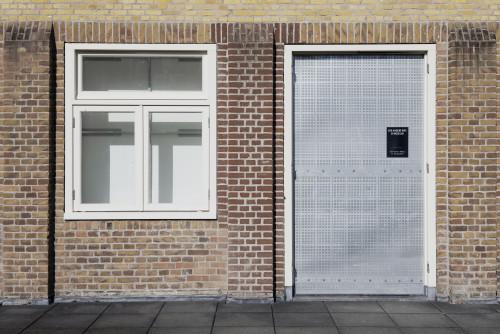
Image: Katrina Palmer, Another Way is Possible, 2026, exterior metal door screen and poster, 138 x 234cm.
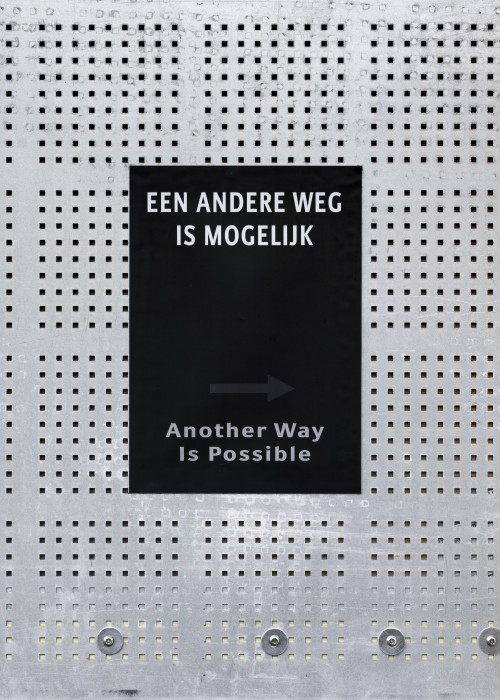
Image: Katrina Palmer, Another Way is Possible, 2026, exterior metal door screen and poster, 138 x 234cm.
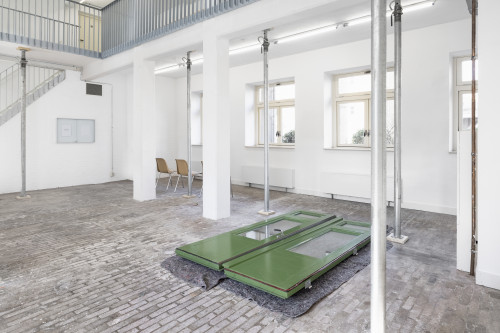
Image: Katrina Palmer, Institution Door, 2026, the institution’s front doors, removal blankets, 138 x 234cm; and Props, 2026, nine scaffolding props (holding up
ceiling), dimensions variable.
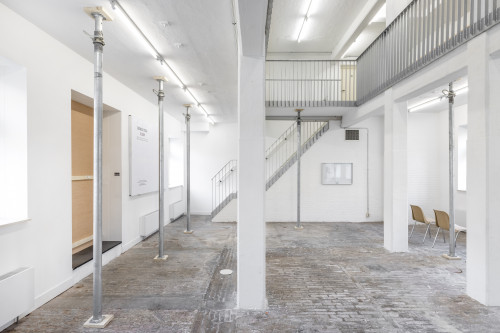
Image: Katrina Palmer, Props, 2026, nine scaffolding props (holding up ceiling), dimensions variable; Chairs, 2026, three chairs (facing out of the building), dimensions variable; and Consultation Noticeboard, 2026, two documents in glass-fronted locked noticeboard, 59.5 x 84.1cm.
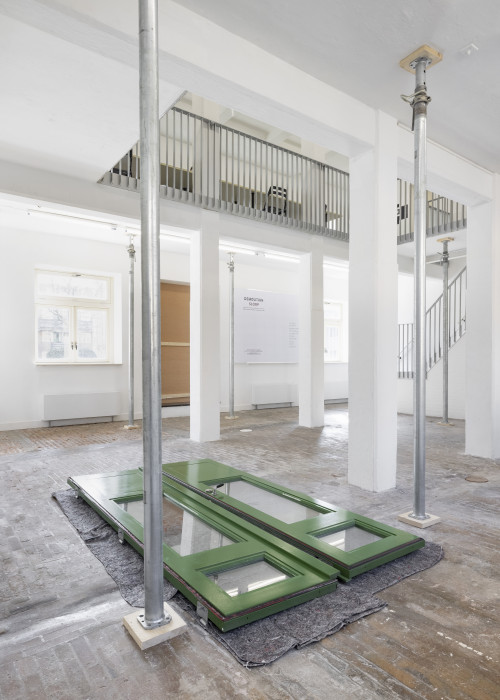
Image: Katrina Palmer, Institution Door, 2026, the institution’s front doors, removal blankets, 138 x 234cm.
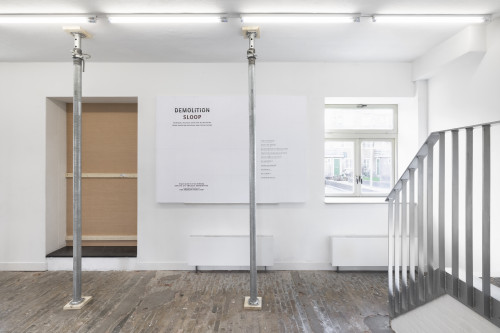
Image: Katrina Palmer, Demolition Billboard, 2026, billboard, collaged text, 223 x 158cm.
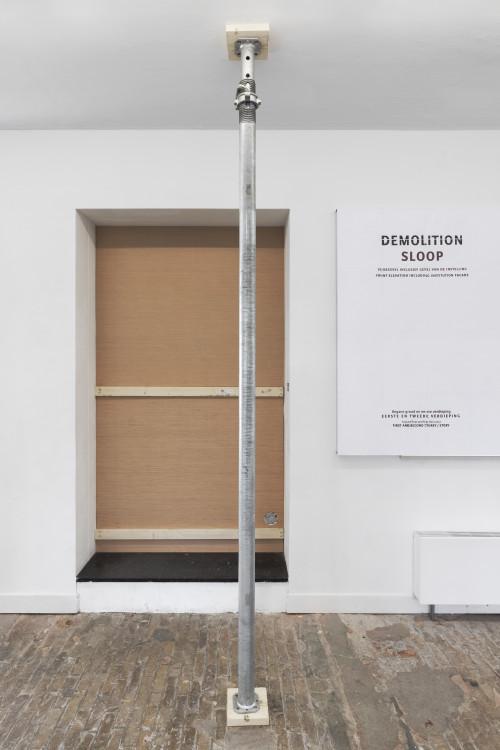
Image: Katrina Palmer, Another Way is Possible, 2026, exterior metal door screen and poster, 138 x 234cm; Props, 2026, nine scaffolding props (holding up
ceiling), dimensions variable; and Demolition Billboard, 2026, billboard, collaged text, 223 x 158cm.
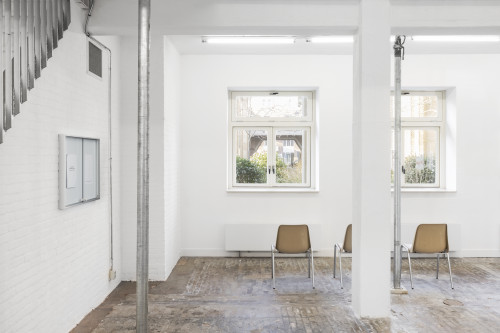
Image: Katrina Palmer, Chairs, 2026, three chairs (facing out of the building), dimensions variable.

Image: Katrina Palmer, Consultation Noticeboard, 2026, two documents in glass-fronted locked noticeboard, 59.5 x 84.1cm.
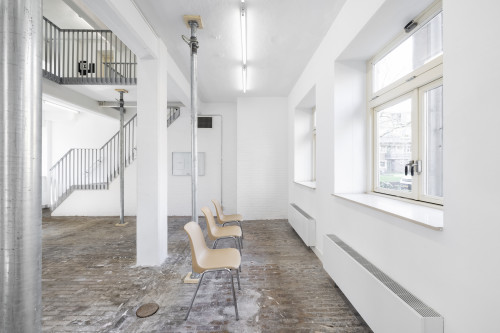
Image: Katrina Palmer, Chairs, 2026, three chairs (facing out of the building), dimensions variable.
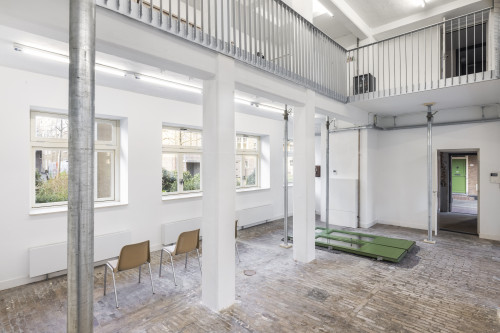
Image: Katrina Palmer, Chairs, 2026, three chairs (facing out of the building), dimensions variable; and Institution Door, 2026, the institution’s front
doors, removal blankets, 138 x 234cm.
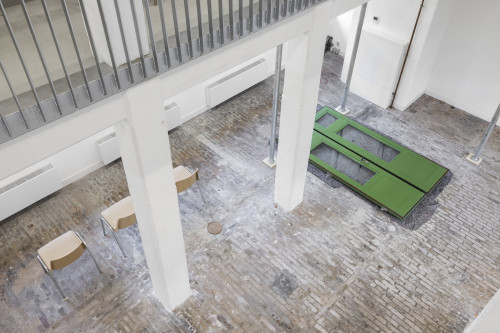
Image: Katrina Palmer, Chairs, 2026, three chairs (facing out of the building), dimensions variable; and Institution Door, 2026, the institution’s front
doors, removal blankets, 138 x 234cm.
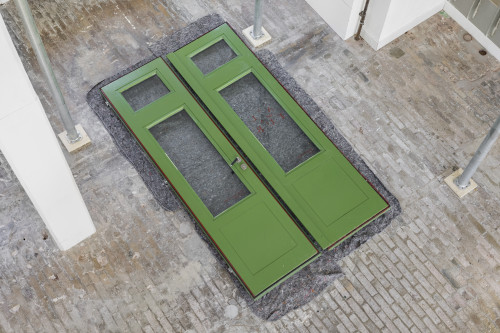
Image: Katrina Palmer, Institution Door, 2026, the institution’s front doors, removal blankets, 138 x 234cm.
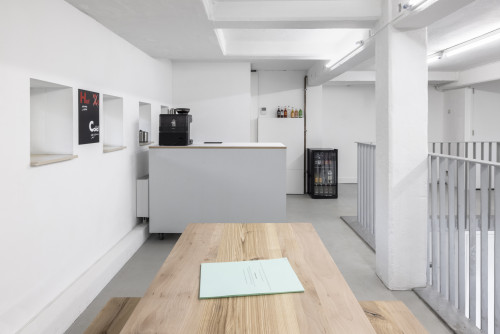
Image: Katrina Palmer, Notes Towards a Paranoid Construction, 2026, short story, 3060 words, multiple stapled sets on A4 paper, available to read in English and Dutch; and Reading space, 2026, reading tables and chairs in-situ, additional furniture relocated from upper storeys, café facilities relocated from ground floor, dimensions spanning entire mezzanine floor.
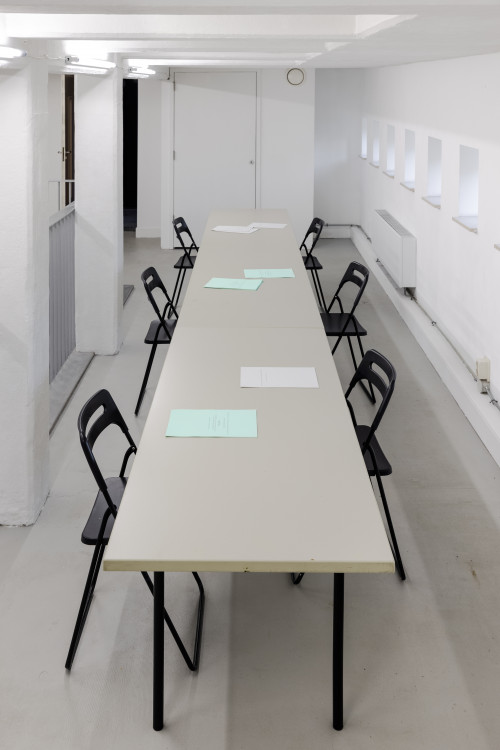
Image: Katrina Palmer, Notes Towards a Paranoid Construction, 2026, short story, 3060 words, multiple stapled sets on A4 paper, available to read in English and Dutch.
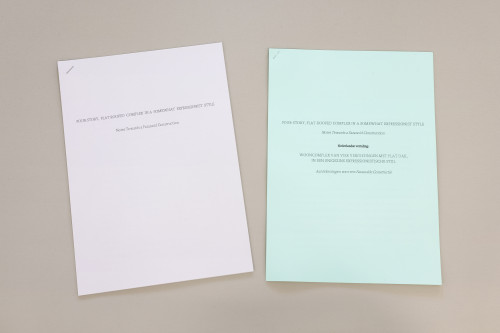
Image: Katrina Palmer, Notes Towards a Paranoid Construction, 2026, short story, 3060 words, multiple stapled sets on A4 paper, available to read in English and Dutch.
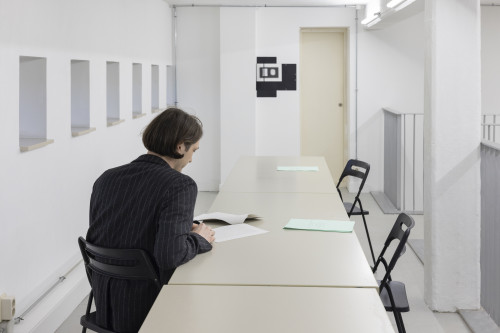
Image: Katrina Palmer, Notes Towards a Paranoid Construction, 2026, short story, 3060 words, multiple stapled sets on A4 paper, available to read in English and Dutch; and TP3 (2/6), 2026, print and tape on paper (mounted on expanded file), 21 x 29.7cm.
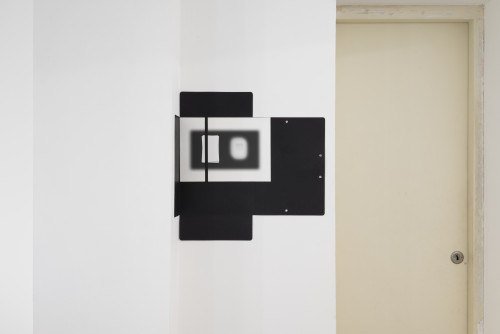
Image: Katrina Palmer, TP3 (2/6), 2026, print and tape on paper (mounted on expanded file), 21 x 29.7cm.
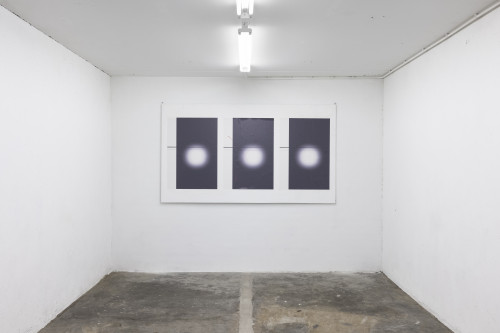
Image: Katrina Palmer, PA1_ X, 2026, ink drawing on inkjet print, 59.5 x 84.1cm; PA1_XX, 2026, ink drawing on inkjet print, 59.5 x 84.1cm; and PA1_XXX, 2026, ink drawing on inkjet print, 59.5 x 84.1cm.
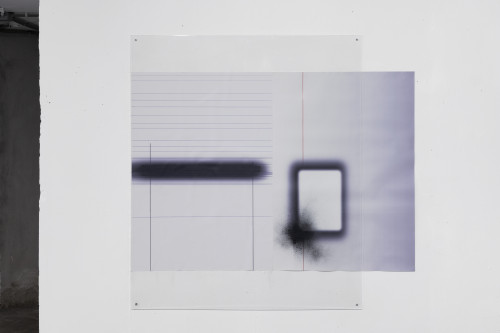
Image: Katrina Palmer, PA1_3, 2026, ink drawing on inkjet print, 59.5 x 84.1cm; and PA1_4, 2026, ink drawing, paint on inkjet print, 59.5 x 84.1cm.
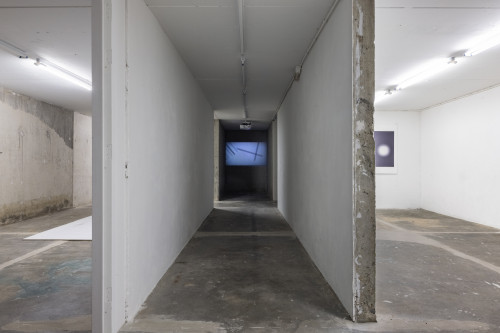
Image: Katrina Palmer, Paranoid Construction X, 2026, video, 6:12mins.
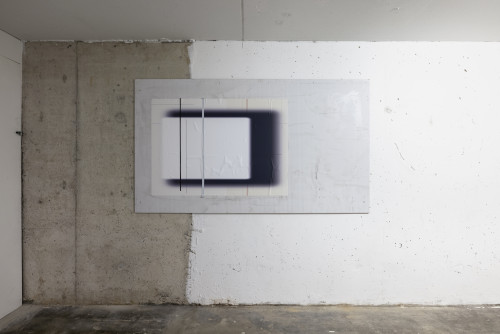
Image: Katrina Palmer, PA0_1, 2026, ink drawing, tape on inkjet print, 84.1 x 118.9cm.
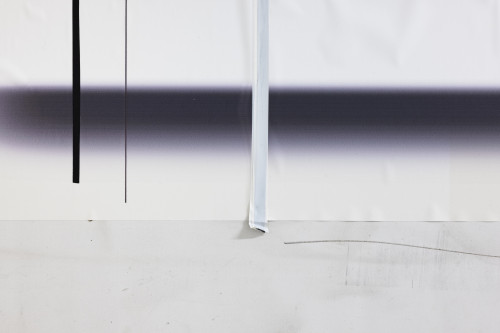
Image: Katrina Palmer, PA0_1, 2026, ink drawing, tape on inkjet print, 84.1 x 118.9cm.
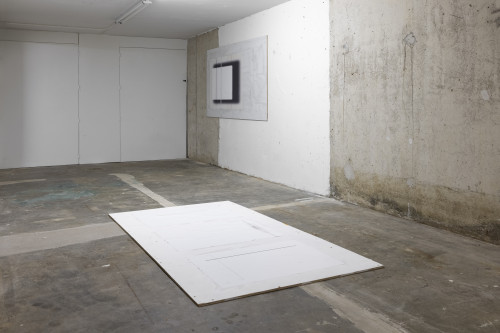
Image: Katrina Palmer, PA0_1, 2026, ink drawing, tape on inkjet print, 84.1 x 118.9cm; PA1_001, 2026, ink drawing on inkjet print, 59.5 x 84.1cm; PA1_002, 2026, ink drawing, tape on inkjet print, 59.5 x 84.1cm; and PA1_003, 2026, ink drawing, tape on inkjet print, 59.5 x 84.1cm.
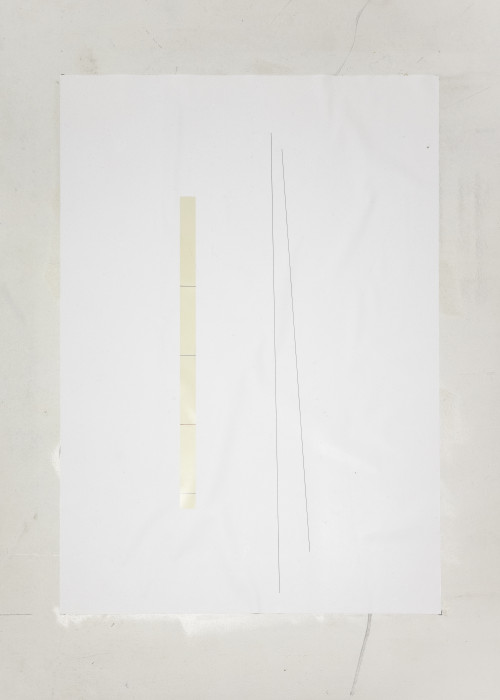
Image: Katrina Palmer, PA1_003, 2026, ink drawing, tape on inkjet print, 59.5 x 84.1cm.
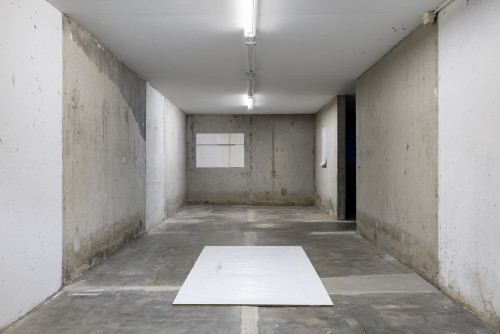
Image: Katrina Palmer, PA0_3, 2026, ink drawing, tape, paint on inkjet print, 84.1 x 118.9cm; and PA1_2, 2026, ink drawing, tape on inkjet print, 59.5 x 84.1cm.
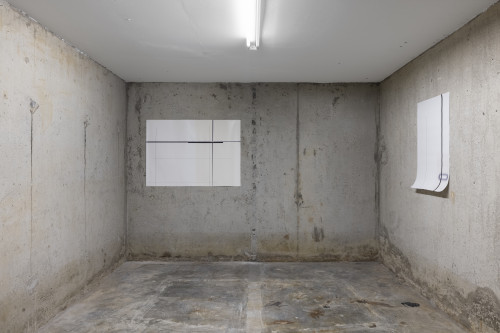
Image: Katrina Palmer, PA0_3, 2026, ink drawing, tape, paint on inkjet print, 84.1 x 118.9cm; and PA1_2, 2026, ink drawing, tape on inkjet print, 59.5 x 84.1cm.
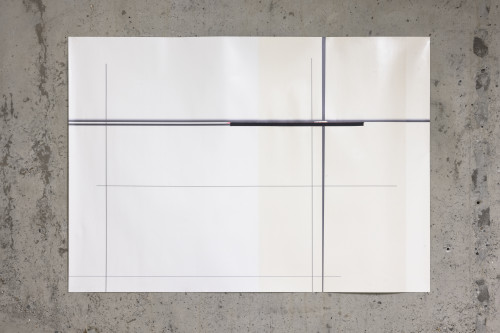
Image: Katrina Palmer, PA0_3, 2026, ink drawing, tape, paint on inkjet print, 84.1 x 118.9cm.
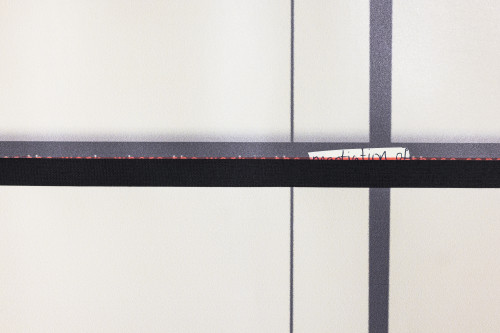
Image: Katrina Palmer, PA0_3, 2026, ink drawing, tape, paint on inkjet print, 84.1 x 118.9cm.
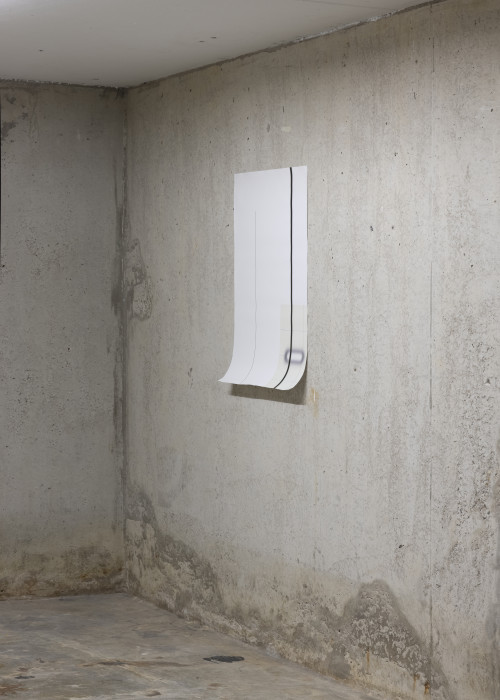
Image: Katrina Palmer, PA1_2, 2026, ink drawing, tape on inkjet print, 59.5 x 84.1cm.
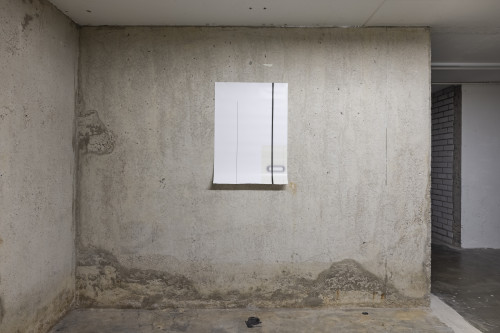
Image: Katrina Palmer, PA1_2, 2026, ink drawing, tape on inkjet print, 59.5 x 84.1cm.
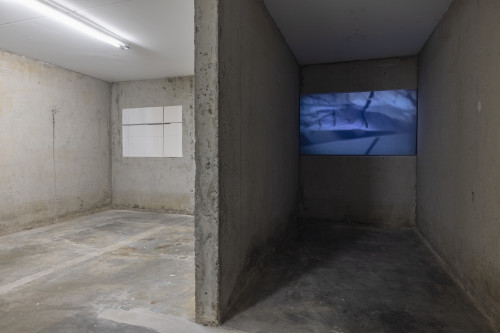
Image: Katrina Palmer, Paranoid Construction X, 2026, video, 6:12mins.
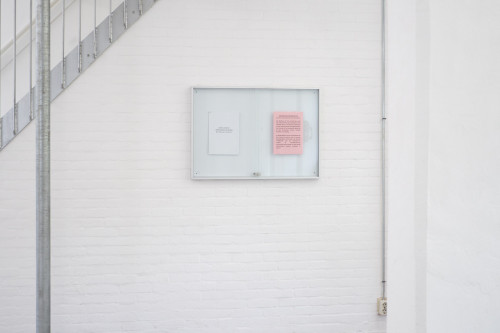
Image: Katrina Palmer, Consultation Noticeboard (Updated), 2026, two documents in glass-fronted locked noticeboard, suspension of work notice added throughout the course of the exhibition, 59.5 x 84.1cm.
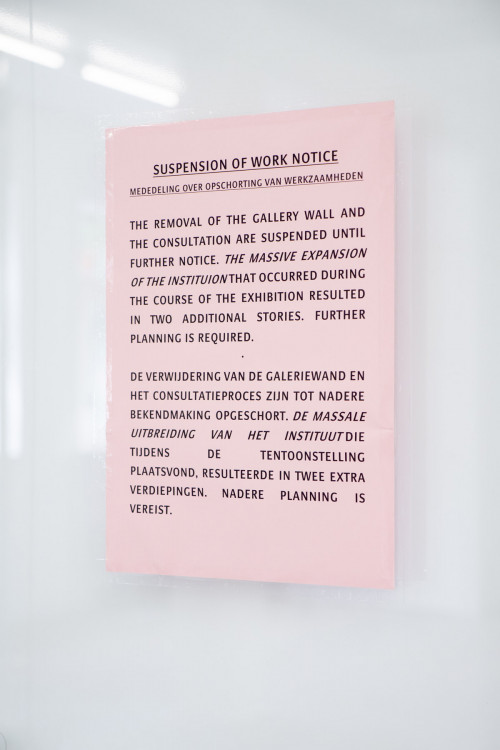
Image: Katrina Palmer, Consultation Noticeboard (Updated), 2026, two documents in glass-fronted locked noticeboard, suspension of work notice added throughout the course of the exhibition, 59.5 x 84.1cm.